
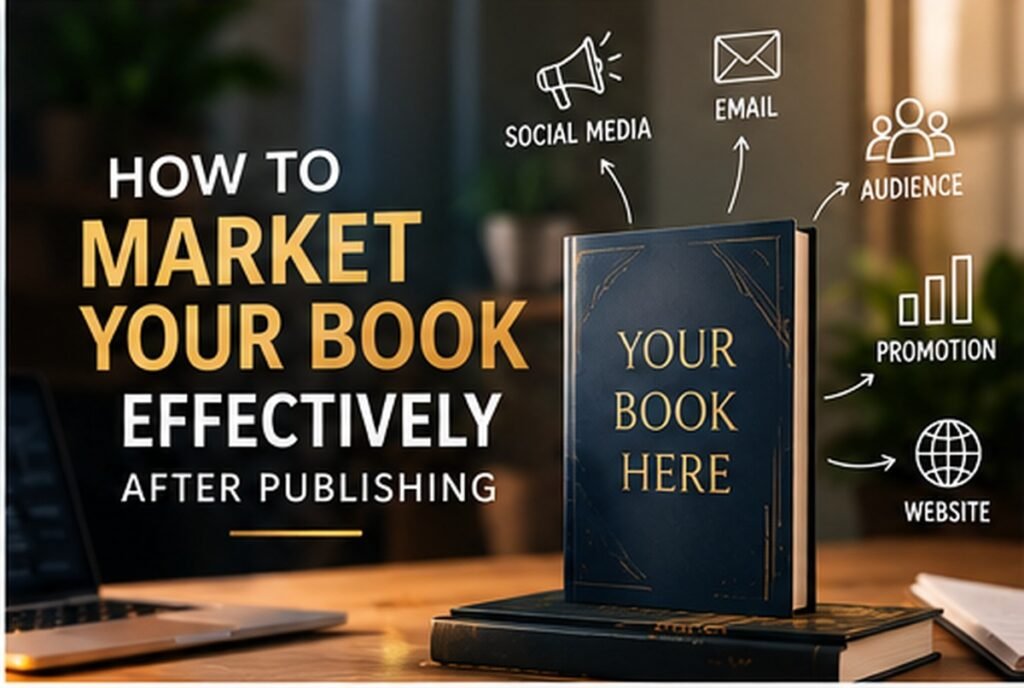
Practical Branding and Book Promotion Strategies for Independent Authors
Publishing a book makes your work available to readers. Helping those readers discover it requires additional planning.
For independent authors, book marketing can involve several activities, including improving the book’s online presentation, developing an author website, communicating with readers, and advertising where appropriate.
Many writers feel pressure to promote their books on every available platform. However, effective marketing begins with knowing who your readers are and how to communicate with them.
A thoughtful approach to author branding and promotion can help you make better decisions about where to spend your time and marketing budget.

1. Understand What Author Branding Means
Your author brand is the way you present yourself and your work to readers.
It includes your author name, the types of books you publish, your visual presentation, the subjects you discuss, and the tone of your communication.
A writer specializing in children’s educational books may need a very different brand presentation from an author of psychological thrillers or business guides.
The aim is to create a recognizable identity that reflects the books you actually produce.
Start by defining the kind of writing you want readers to associate with your name.
If you publish across several unrelated genres, consider how you will distinguish those projects without confusing your audience.
2. Identify Your Ideal Readers
Before promoting your book, determine who is most likely to appreciate it.
Consider the reader’s interests, age group where relevant, preferred genres, and reasons for purchasing books like yours.
For nonfiction, think about the questions your book answers or the knowledge it provides.
A guide to writing business proposals, for example, may appeal to freelancers, entrepreneurs, and professionals seeking practical guidance.
A fantasy novel will require a different approach because readers are likely to be interested in themes, characters, worldbuilding, and similar fiction.
Clear audience identification helps you decide which marketing channels, messages, and promotional materials are appropriate.
3. Build a Professional Author Website
An author website gives you a central place to present your books and information about your writing.
Unlike a social media profile, a website allows you to organize your content around your own priorities.
A useful author website may include a homepage, author biography, book catalogue, individual book pages, contact information, and links to retailers.
You can also publish articles, share news about your books, and provide a newsletter signup.
Keep the design clean and easy to navigate.
Readers should be able to understand who you are, what you write, and where to find your books without searching through several pages.
Make sure the website works properly on mobile devices, since many visitors will access it using their phones.
4. Make Your Book Pages Clear and Informative
Each book deserves a clear presentation.
Include the title, cover image, description, available formats, and relevant purchasing links.
If a book belongs to a series, show readers its position within that series.
For nonfiction, summarize the main subjects covered and the audience the book is intended to serve.
For fiction, provide enough information about the story to establish interest without revealing important developments.
Avoid exaggerated promotional language or unsupported claims.
A good book page should help readers decide whether the title matches their interests.
5. Create Useful Content Around Your Books
Authors can use articles, newsletters, and social posts to share relevant information with readers.
The most suitable content depends on what you publish.
A nonfiction author might discuss topics related to the book, answer common questions, or explain useful concepts.
A novelist might share character introductions, writing updates, background research, or information about a fictional setting.
Children’s book authors can provide age-appropriate reading resources, educational activities, and useful information for parents or teachers.
You do not need to publish something every day.
A manageable posting schedule with useful, accurate content is more practical than producing large amounts of material that readers have little reason to engage with.
6. Use Email Marketing Carefully
An email newsletter allows interested readers to receive updates directly from you.
Subscribers might want information about new releases, additional books in a series, upcoming appearances, or articles related to your subject.
Give people a clear reason to subscribe.
For example, you might offer a relevant sample chapter, a useful reading guide, or a short resource connected to your book’s topic.
Make sure subscribers understand what they are signing up for, and provide a straightforward way to unsubscribe.
Respect privacy and applicable email marketing requirements.
A smaller list of readers who genuinely want your updates can be more useful than a large collection of unrelated contacts.
7. Understand Amazon Book Advertising
Amazon Ads is one option for eligible authors who want to promote books to customers browsing Amazon.
Sponsored Products ads can appear in shopping results and on product detail pages. Amazon also provides other book advertising options depending on eligibility and marketplace availability.
Advertising requires planning because visibility does not automatically result in sales.
Before launching a campaign, review your book cover, description, pricing, and product detail page.
Set a budget you can afford and monitor campaign performance.
Look at how much you spend, which ads attract clicks, and whether purchases justify the advertising costs.
Avoid interpreting a large number of impressions as proof that the campaign is profitable.
Amazon provides campaign reporting tools to help advertisers review results.
8. Keep Your Visual Branding Consistent
Consistency helps readers recognize your author identity.
Use a coordinated approach to colors, fonts, author photographs, and promotional graphics across your website and relevant online channels.
Your book covers do not all need to look identical. However, titles within the same series may benefit from a recognizable visual relationship.
A mystery series might use related typography and cover arrangements, while an educational series could maintain consistent colors, labels, and layout elements.
Good branding should help readers identify your work rather than distract from the books themselves.
9. Plan Your Marketing Budget
Before spending money on advertising or promotional services, decide what you want those activities to achieve.
Some authors want to introduce a new release. Others hope to increase awareness of an existing series or direct more readers to their author website.
Each objective may require a different approach.
Start with a realistic budget.
Account for advertising costs, promotional graphics, website maintenance, and any professional services you intend to use.
Do not assume that every paid promotion will generate sales.
Review the results and discontinue activities that are not providing sufficient value.
For new authors, it may be better to begin with a manageable campaign than to commit a large budget before understanding the response to the book.
10. Build Relationships With Readers
Book marketing is not limited to advertisements and promotional posts.
Readers may discover your work through recommendations, newsletters, book reviews, community discussions, and other authors.
Respond professionally to genuine questions and feedback.
If readers contact you about your books, provide clear answers where appropriate.
Avoid pressuring people to leave positive reviews or using misleading methods to influence ratings.
Over time, reliable communication and consistent publishing activity can help readers become familiar with your work.
11. Review Your Marketing Results
Marketing plans should be reviewed rather than followed indefinitely without checking performance.
Monitor website visits, newsletter subscriptions, book sales where you have access to the figures, and advertising costs.
Look for patterns.
You may find that readers respond more strongly to articles on a particular topic, that one book attracts more interest than another, or that certain advertising campaigns cost too much relative to the purchases they produce.
Use these observations to make informed decisions about future promotional activity.
Avoid judging the entire marketing effort from a single day or one advertisement.
Results can vary according to the book, audience, marketplace, price, and timing.
Final Thoughts
Building an author brand takes planning, consistency, and an understanding of your readers.
A professional website, clear book descriptions, useful content, appropriate promotional channels, and careful advertising decisions can all contribute to a more organized marketing approach.
There is no single marketing method that works for every author or every book.
At Ultimate Choice Publishing, we provide author website design, branding, book marketing, and Amazon advertising services for authors who need professional support presenting and promoting their work.
Our services can be tailored to individual publishing goals, whether you are preparing a new book release or developing your presence as an established author.
Need help with your author website or book marketing? Contact Ultimate Choice Publishing to discuss your project.